№ 24 · BIOLOGY
Oral probiotics: what works and what doesn't
June 06, 2026 · QDRO Team
About 700 species of microorganisms live in the human mouth. The question is not whether you have bacteria in your mouth — everyone does — but which bacteria occupy the ecological niches. Streptococcus mutans and Porphyromonas gingivalis, or Lactobacillus reuteri and Streptococcus salivarius? The composition of that community determines whether you develop caries, gum inflammation, and bad breath.
Oral probiotics are not just a fashionable product of the 2020s. This is a field with more than twenty randomized controlled trials and several well-characterized strains behind it. But as everywhere in nutraceuticals, there is a chasm between "studies exist" and "this works in any application."
The mechanism: why "good" bacteria displace the bad ones
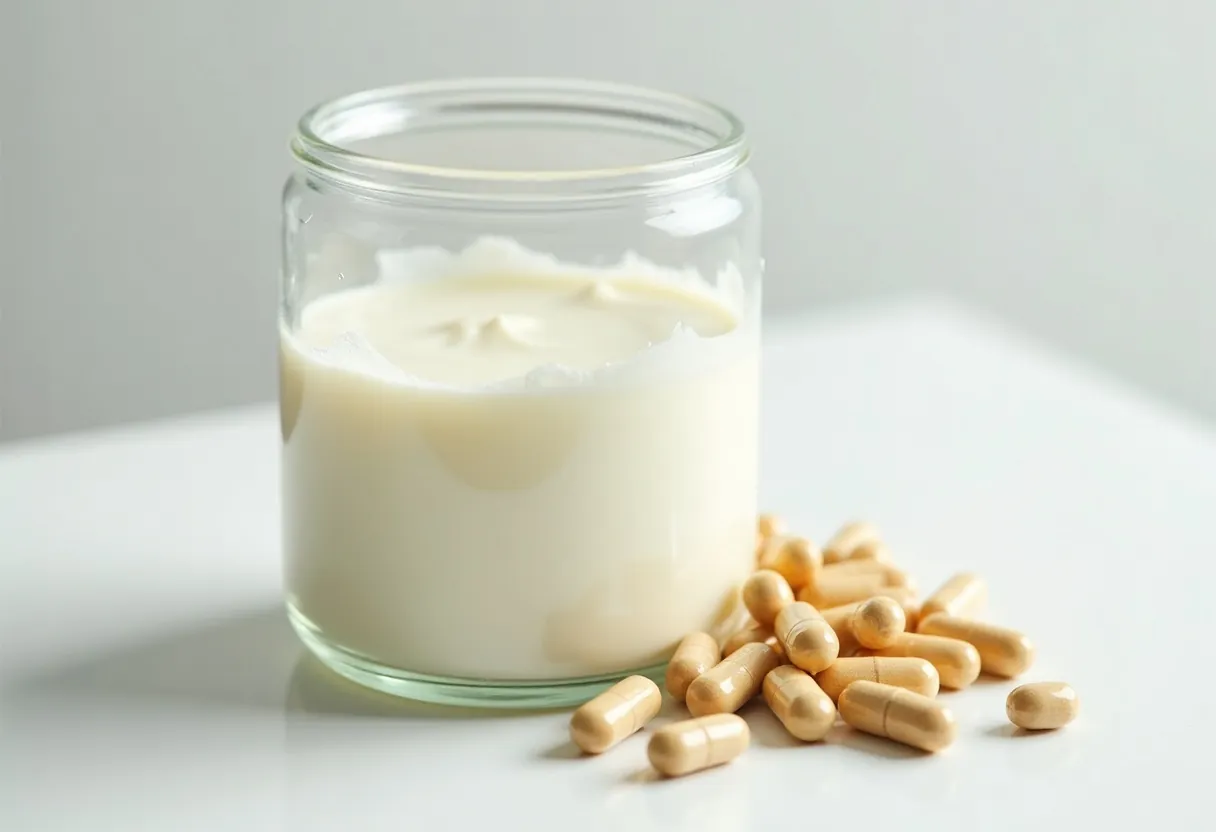
The key principle of oral probiotics is competitive exclusion. Pathogenic microorganisms do not exist in a vacuum: they need adhesion sites on the mucosa and tooth surface, nutrients, and a particular ambient pH. If those niches are already occupied, it is harder for a pathogen to establish itself.
Probiotic lactobacilli and streptococci use several specific mechanisms:
Production of organic acids. L. reuteri synthesizes reuterin (3-hydroxypropionaldehyde), a broad-spectrum antimicrobial agent active against both gram-positive and gram-negative bacteria. Unlike lactic acid, reuterin does not lower the ambient pH and does not damage enamel.
Competition for adhesins. Streptococcus salivarius K12 binds to the same epithelial cell receptors as Streptococcus pyogenes, physically blocking its attachment. The same mechanism operates in competition with other oropharyngeal pathogens.
Biofilm modulation. Probiotic lactobacilli, including L. reuteri, inhibit S. mutans biofilm formation in vitro — partly by downregulating the genes responsible for biofilm formation and glucan synthesis. Without glucans, S. mutans cannot attach to the tooth surface with sufficient strength (PMID 29316223).
Immune modulation. Some strains reduce levels of pro-inflammatory cytokines (IL-1β, IL-6, TNF-α) in gingival crevicular fluid, which matters especially in gingivitis. This is not simply suppression of a pathogen, but a reprogramming of the host inflammatory response.
Strains with an evidence base
Not all probiotics are alike. Effects are strictly strain-specific: data on L. rhamnosus GG (ATCC 53103) do not automatically transfer to other L. rhamnosus strains, even though they are the same species. In oral medicine, a handful of strains have been through serious clinical trials.
L. reuteri DSM 17938 + ATCC PTA 5289 is the most studied pair for use in the oral cavity, developed by the Swedish company BioGaia. The combination is deliberate: DSM 17938 produces reuterin in a neutral environment, ATCC PTA 5289 at a more acidic pH. Together they cover a wide range of conditions.
A 2020 systematic review and meta-analysis (PMID 31682012) analyzed 10 RCTs on the use of probiotics in gingivitis. Every included study showed clinical improvement at the endpoint: bleeding on probing (BOP) was lower in the probiotic groups. However, when the L. reuteri data were pooled, the combined effect for the gingival index (GI) and the plaque index (PI) did not reach statistical significance, and the authors' overall conclusion was that the evidence is weak, with high heterogeneity between studies.
A separate 2013 study (PMID 24164569) — a 12-week placebo-controlled RCT in patients with chronic periodontitis — showed that adding L. reuteri lozenges to a scaling and root planing protocol produced significantly greater reductions in probing depth and greater gains in clinical attachment level in moderate and deep pockets compared with mechanical treatment alone. The difference was statistically significant at p < 0.05.
10 double-blind placebo-controlled RCTs. All studies showed clinical improvement in bleeding on probing, but the pooled effect for the gingival index and the plaque index (for L. reuteri) did not reach statistical significance. The authors' conclusion: the evidence is weak, the heterogeneity high.
L. rhamnosus GG (ATCC 53103) is one of the most studied probiotic strains in medicine as a whole. Applied to the oral cavity, the data are less clear-cut. A systematic review and meta-analysis of 50 RCTs (PMID 26965080) showed that probiotics significantly reduce S. mutans counts in saliva, but the reduction in caries incidence was not statistically significant, and the authors themselves concluded that the data are quantitatively insufficient for firm conclusions. The main problem is small sample sizes and differing protocols.
Streptococcus salivarius K12 is a native oropharyngeal strain, used mainly for the prevention of halitosis and pharyngitis. It produces the bacteriocins salivaricin A and B, which suppress Streptococcus pyogenes and the anaerobes responsible for bad breath. Several small RCTs have confirmed a reduction in halitosis measures with regular use.
Delivery format: lozenges vs chewing gum vs everything else
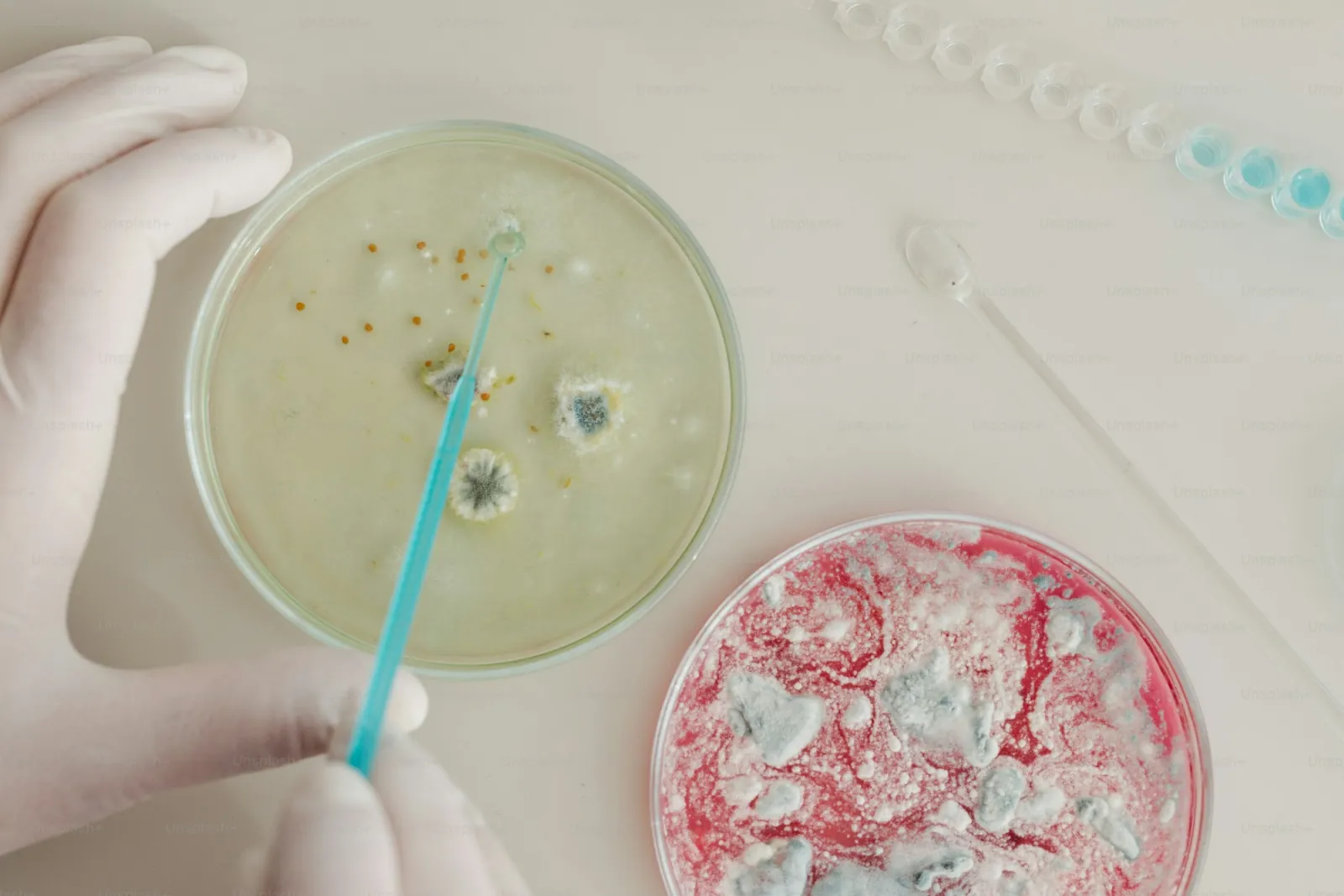
This is a fundamental question — and one where marketing often runs ahead of the science. Oral probiotics differ fundamentally from gut probiotics: their goal is not to pass through the stomach but to stay in the mouth as long as possible. That changes the logic of delivery formats entirely.
Lozenges (slow-dissolving tablets) are the most studied format in clinical trials with L. reuteri. The tablet is dissolved slowly: this provides a gradual release of bacteria directly into saliva, their distribution across all oral surfaces, and sufficient contact time with the mucosa. Most positive RCTs used exactly this format — 2 lozenges of 10⁸ CFU each, in the evening after hygiene.
Chewing gum is a potentially convenient format, but with a serious limitation: mechanical chewing damages some of the bacteria before they are even released, and the sugar alcohols in the formulation affect strain viability. Studies with gum give more variable results.
Powders and capsules for swallowing are common at retail, but logically wrong for oral effects. Swallowing carries the bacteria into the stomach, bypassing the oral cavity. Some strains survive and colonize the gut, but the oral targets (reducing S. mutans, correcting gingivitis) are not achieved.
Probiotic oil for rinsing is an experimental format. In theory it provides good contact, but the viability of live bacteria in an oil medium during storage is a separate technological problem.
Probiotic toothpastes are the most problematic format. Most pastes contain surfactants (SLS), antiseptics (triclosan, cetylpyridinium chloride), and a high pH — all of which are lethal to live bacteria. Measuring the actual number of viable CFU in a paste on the shelf is a separate task, and one manufacturers rarely address transparently.
Dosage. In studies with a demonstrated effect, the typical dose was 10⁸–10⁹ CFU per day (for L. reuteri, 2 × 10⁸ CFU in the evening). That does not mean "more is better": above a certain threshold the effect does not grow linearly, and viability in storage matters more than the number on the label.
Limitations and honest caveats
Despite the encouraging data, oral probiotics have real limitations that deserve to be stated honestly.
Colonization is not permanent. Most probiotic strains do not settle in the oral cavity for good. They are present while you take them and disappear 2–4 weeks after you stop. The effect requires maintenance — like physical exercise.
Not a replacement for mechanical hygiene. Every meaningful periodontitis RCT used probiotics in addition to scaling, not instead of it. There are no studies in which a probiotic alone outperformed mechanical cleaning.
Product quality on the market. Studies are run with specific strains at specific doses. A product on a store shelf may contain a different strain with the same species name — or the stated CFU count at manufacture but not at purchase (viability falls during storage without refrigeration). This is a systemic problem across the whole probiotic industry.
Heterogeneity of the research. Meta-analyses of oral probiotics run into high heterogeneity: different strains, formats, doses, durations, and patient populations. Combining them into a single number is hard to do without losing meaning.
A rare risk in immunocompromised people. For healthy people, oral probiotics are safe. For patients with severe immunosuppression, after transplantation, or with congenital immunodeficiencies, the risk of bacterial translocation calls for medical advice.
What is actually worth using
Summing up the evidence honestly: the strongest support is for L. reuteri DSM 17938 + ATCC PTA 5289 in lozenge form for gingivitis, as an addition to standard hygiene. It is not a revolution, but a real clinical bonus with a good safety profile.
S. salivarius K12 is a reasonable choice for chronic halitosis, once other causes (periodontal pockets, caries, GERD) have been ruled out.
L. rhamnosus GG does not yet have a strong enough base for oral purposes, although for gut health it remains one of the best-studied strains.
Probiotics occupy the place of the final layer in a hygiene system: they do not replace a good brush, the right paste, or floss, but they can shift the microbial balance in favor of health — provided you choose the right strain and the right format.
In the context of a systematic approach to oral hygiene — what QDRO calls a system rather than a set of products — probiotics occupy the place of the final layer: they do not replace a good brush, the right paste, or floss, but they can shift the microbial balance in favor of health. Provided you choose the right strain and the right format.
Sources:
- PMID 29316223 — Wasfi R. et al., Journal of Cellular and Molecular Medicine, 2018 — inhibition of growth, biofilm formation, and gene expression in S. mutans by probiotic lactobacilli (including L. reuteri) in vitro
- PMID 31682012 — Akram Z. et al., Australian Dental Journal, 2020 — systematic review and meta-analysis of 10 RCTs on the clinical efficacy of probiotics in gingivitis
- PMID 24164569 — Teughels W. et al., Journal of Clinical Periodontology, 2013 — 12-week placebo-controlled RCT of L. reuteri plus scaling and root planing in chronic periodontitis
- PMID 26965080 — Gruner D. et al., Journal of Dentistry, 2016 — systematic review and meta-analysis of 50 RCTs on probiotics in caries and periodontitis
- DOI 10.1111/omi.12168 — Riccia D.N. et al., Oral Microbiology and Immunology, 2007 — anti-inflammatory effects of L. brevis in gingival crevicular fluid
- PMID 22899689 — Twetman S., Keller M.K., Advances in Dental Research, 2012 — review of the clinical data on probiotics and caries