№ 30 · SCIENCE
How Nano-Hydroxyapatite Integrates into Enamel: The Molecular Mechanism
June 07, 2026 · QDRO Team
Nano-HAp is frequently described as a "biomimetic remineralizing agent" — but what does that mean in practice? Enamel is not simply coated with mineral from the outside. Nanoparticles integrate into the crystal lattice following the same principles that govern biological apatite. Here is the mechanism, without oversimplification.
Enamel as a Crystal Matrix
Tooth enamel is the hardest tissue in the human body — but calling it simply "hard" is not enough. It is a highly ordered crystal matrix. About 97% of its inorganic content is hydroxyapatite with the formula Ca₁₀(PO₄)₆(OH)₂. The remaining 3%: carbonate, magnesium, sodium, trace elements.
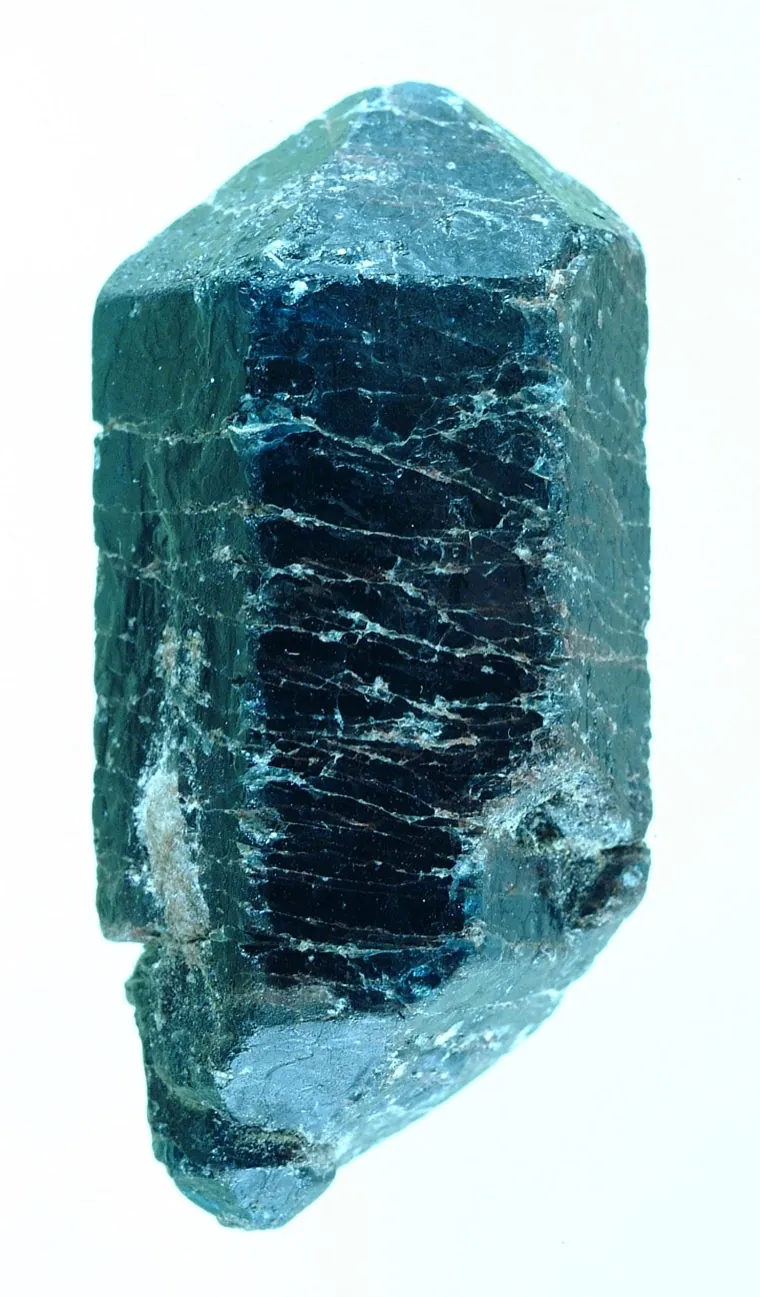
Native apatite crystals in enamel are needle-shaped: 50–100 nm long, 20–40 nm wide, 5–10 nm thick. They are packed into bundles — enamel prisms — oriented perpendicular to the tooth surface. This packing gives enamel its anisotropic hardness: it resists compressive force along the prism axis but is vulnerable to shear.
The practical consequence: during acid attack (pH below 5.5), the crystal lattice does not break down randomly — it dissolves along defect zones where the intercrystalline organic matrix is thinnest. This creates pores and subsurface demineralization zones. That is precisely where building material needs to be delivered.
Review: synthetic hydroxyapatite as a biomimetic oral care ingredient — its effect on tooth sensitivity, caries, erosion, and biofilm. Oral Health Prev Dent 2018;16(1):7–19. PubMed 29335686
What Happens When Nano-HAp Contacts Enamel
When a nano-HAp particle reaches the enamel surface, a sequence of events unfolds — not a single reaction, but a cascade.
Adsorption. The initial contact is electrostatic. The surface of nano-HAp carries a negative charge due to excess phosphate groups. The surface of demineralized enamel is weakly positive due to exposed Ca²⁺ ions. Particles are attracted to lesion zones where the charge differential is greatest. This is not random distribution — it is directed adsorption.
Ionic substitution. At physiological pH (6.5–7.4), nanoparticles gradually dissolve at the enamel surface, releasing Ca²⁺ and PO₄³⁻. Local concentrations of these ions near the enamel surface far exceed equilibrium levels. Under supersaturation, crystallization begins — ions integrate into the existing enamel lattice, filling vacancies at Ca²⁺ and PO₄³⁻ positions.
Diffusion into the subsurface layer. The critical point: nanoparticles sized 20–80 nm can penetrate through the porous demineralized surface into deeper layers. The diameter of intercrystalline pores in an early carious zone is 10–100 nm. Particles literally enter the lesion from within, not just coat it from above. There, they dissolve and participate in local remineralization at depths inaccessible to ions from saliva.
PMC9102186. Analysis of 28 studies (17 in vitro, 11 clinical): confirmed ability of nano-HAp to penetrate subsurface enamel defects and participate in remineralization from within. Optimal concentration: 10%.
Why the 20–80 nm Size Range Is Critical
Size is not a marketing term. It is a physical boundary for access.
Conventional hydroxyapatite with particle sizes of 1–5 µm (1000–5000 nm) cannot enter the intercrystalline pores of demineralized enamel. It works exclusively as a surface agent: sealing visible defects and forming a layer on the outside. Useful — but mechanistically different.
Nanoparticles of 20–80 nm are comparable to native enamel crystals (20–40 nm wide). Three consequences:
Surface area. At equal mass, nano-HAp exposes hundreds of times more reactive surface than micro-HAp. More surface means more ion exchange sites, a higher rate of Ca²⁺ and PO₄³⁻ release at the enamel surface.
Depth of penetration. Only particles below 100 nm can enter the pores of a demineralized layer.
O'Hagan-Wong et al. showed that nano-HAp penetrates deeper into lesions than fluoride, which acts predominantly at the surface. Odontology, 2021. PMC8930857
Dissolution kinetics. Nanoparticles have higher solubility at physiological pH compared to sintered micro-HAp. This is critical: the agent must dissolve fast enough to release ions at the target site — but not so fast that it disperses before arriving. The 20–80 nm range delivers the right balance.
Remineralization vs Fluoridation: Different Mechanisms
Understanding the molecular mechanism of nano-HAp matters most when comparing it to fluoride — because they operate on fundamentally different logic.
Fluoride does not supply building material. It acts as a catalyst and modifier. The fluoride ion inserts into the crystal lattice in place of the hydroxyl group, converting hydroxyapatite to fluorapatite — Ca₁₀(PO₄)₆F₂. Fluorapatite is less soluble: its critical dissolution pH is 4.5 versus 5.5 for HAp. In parallel, fluoride lowers the crystallization energy barrier, accelerating mineral deposition from the surrounding fluid.
Nano-HAp delivers the material itself. It does not wait for saliva to saturate the environment with calcium and phosphate — it brings them directly to the defect zone. This is especially important when salivary flow is reduced (xerostomia, medication, age), after aggressive procedures (whitening, professional cleaning), or when gum recession has exposed dentine.
Comparison with amine fluoride toothpaste: nano-HAp produced stronger remineralization on dentine, and comparable results on enamel. In vitro study, J Dent 2011;39(6):430–437. PubMed 21504777
A second key distinction: dentinal tubule occlusion. Dentinal tubules have a mouth diameter of 1–3 µm. Nano-HAp particles (20–80 nm) can enter and physically block the tubules, reducing hypersensitivity. Fluoride has no such mechanism — it does not close tubules.
A third distinction — safety on ingestion. HAp is the biological analog of tooth tissue. If accidentally swallowed (critical for children under 6), it presents no toxicological burden. Systemic fluoride at chronic excess is associated with fluorosis and neurodevelopmental concerns (NTP, 2024).
This is not a "better/worse" hierarchy — it is two different tools for different tasks. A detailed clinical comparison and indications table appears in nano-hydroxyapatite vs fluoride: what the science says.
What Follows From This
Nano-HAp is not a "coating" or a cosmetic layer on top of the tooth. It is the same mineral enamel is built from, delivered at a size that lets it integrate into the crystal rather than simply sit on top of it. It works gently and gradually: enamel is not restored in a single application — this is daily support for mineral exchange, not a one-time repair.
For how mineral exchange in enamel works under normal conditions and why it breaks down, see enamel remineralization: mechanism and evidence.
Sources:
O'Hagan-Wong K, Enax J, Meyer F, Ganss B. The use of hydroxyapatite toothpaste to prevent dental caries. Odontology. 2021. PMC8930857
Nano-HAp in the Remineralization of Early Dental Caries: A Scoping Review. IJERPH. 2022. PMC9102186
Tschoppe P, Zandim DL, Martus P, Kielbassa AM. Enamel and dentine remineralization by nano-hydroxyapatite toothpastes. J Dent. 2011;39(6):430-437. PubMed 21504777
Huang SB, Gao SS, Cheng L, Yu HY. Remineralization potential of nano-hydroxyapatite on initial enamel lesions. Caries Res. 2011;45(5):460–468.
Enax J, Epple M. Synthetic hydroxyapatite as a biomimetic oral care agent. Oral Health Prev Dent. 2018;16(1):7–19. PubMed 29335686
Ten Cate AR. Ten Cate's Oral Histology: Development, Structure, and Function. 8th ed. Elsevier, 2013.